Custer in Virginia
Growing up the only time I heard the name George Armstrong Custer was always in relationship to his “last stand.” But in my journey through Virginia, I’ve come across his tracks a couple of times.
The first was at Travelian Station where “Over a two day killing spree (June 11-12, 1864), General Robert E. Lee’s Army of Northern Virginia Confederate cavalry, led by Major Generals Wade Hampton and Fitzhugh Lee, fought the Union cavalry of Lt. General General Ulysses S. Grant (attached to Grant’s Overland Campaign) under the command of Major General Philip Sheridan, and Brigadier General George Armstrong Custer, for control of the Virginia Central Railroad. Sheridan’s orders were to ensure that "every rail on the road destroyed should be so bent and twisted as to make it impossible to repair the road without supplying new rails."
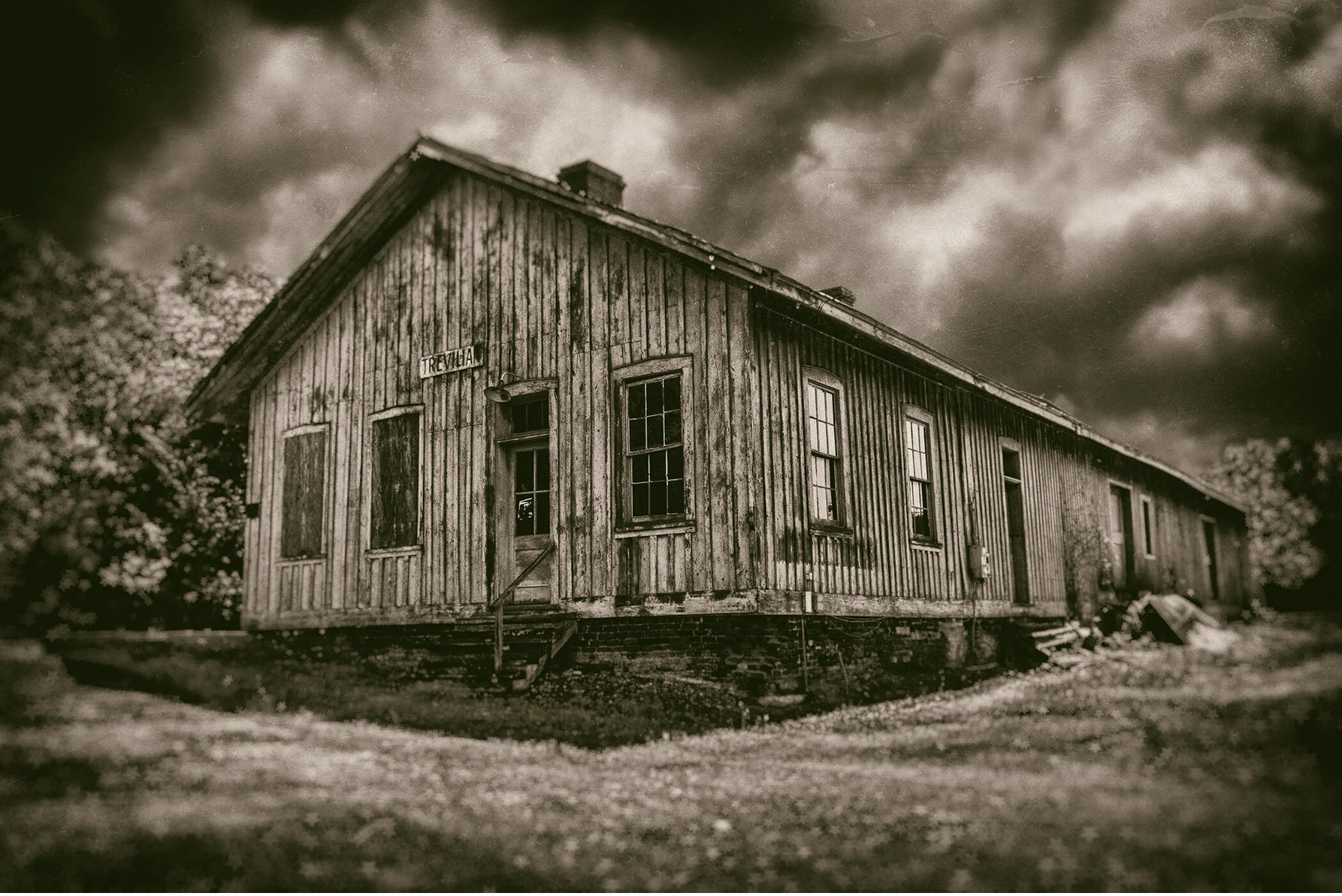
There were 1,950 estimated casualties (950 Union; 1000 Confederate). At one point Custer found his troops surrounded by Lee’s Virginia Brigades in what historians would later refer to as “Custer’s First Last Stand.” Historians also note that this two day battle was the largest all-cavalry battle of the Civil War.”

The second was at the Tombstone House which is tied to Custer by the Siege of Petersburg from June 9, 1864 – March 23, 1865 where when Lee’s army fled, Custer’s cavalry pursued them.
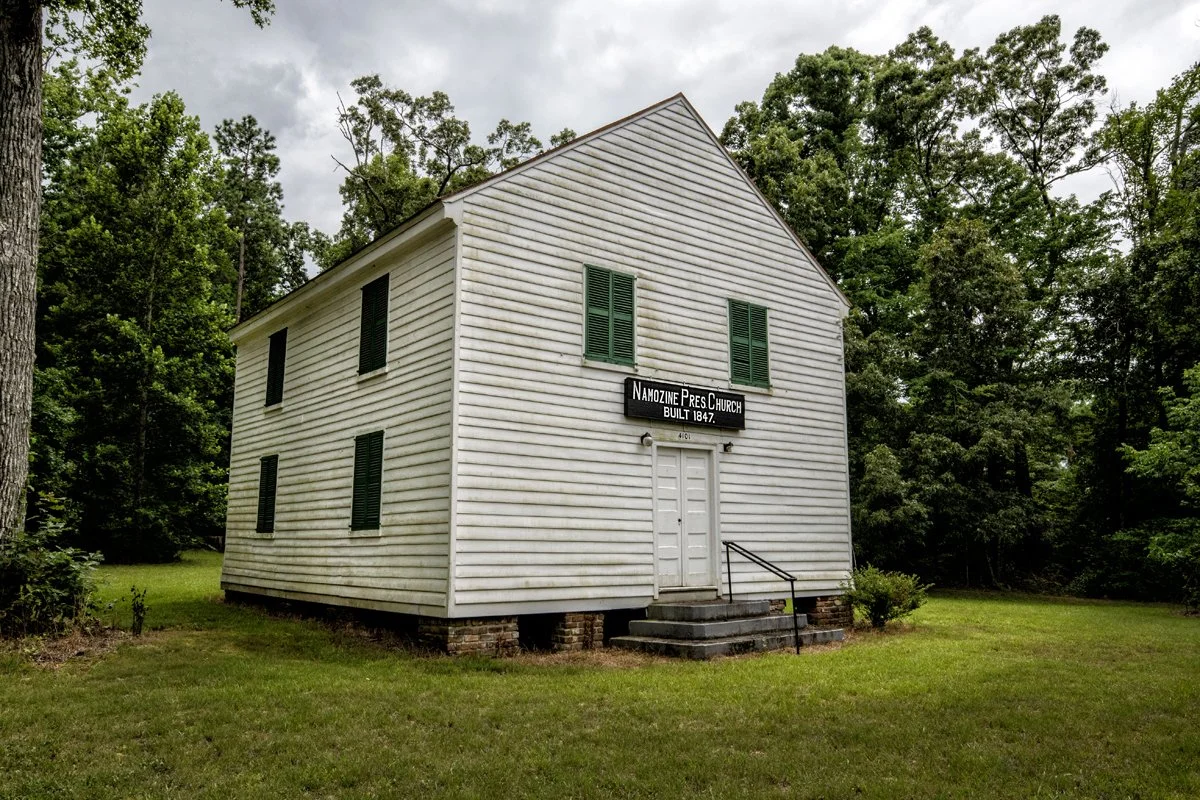
And the third is this little church where Confederate General Rufus Barringer posted his calvary as the rear guard for General Robert E Lee’s Army of Northern Virginia was trying to escape to North Carolina. Custer’s calvary came “charging down the road and struck the entire line…Some 350 (confederates) were captured, including Barringer.”
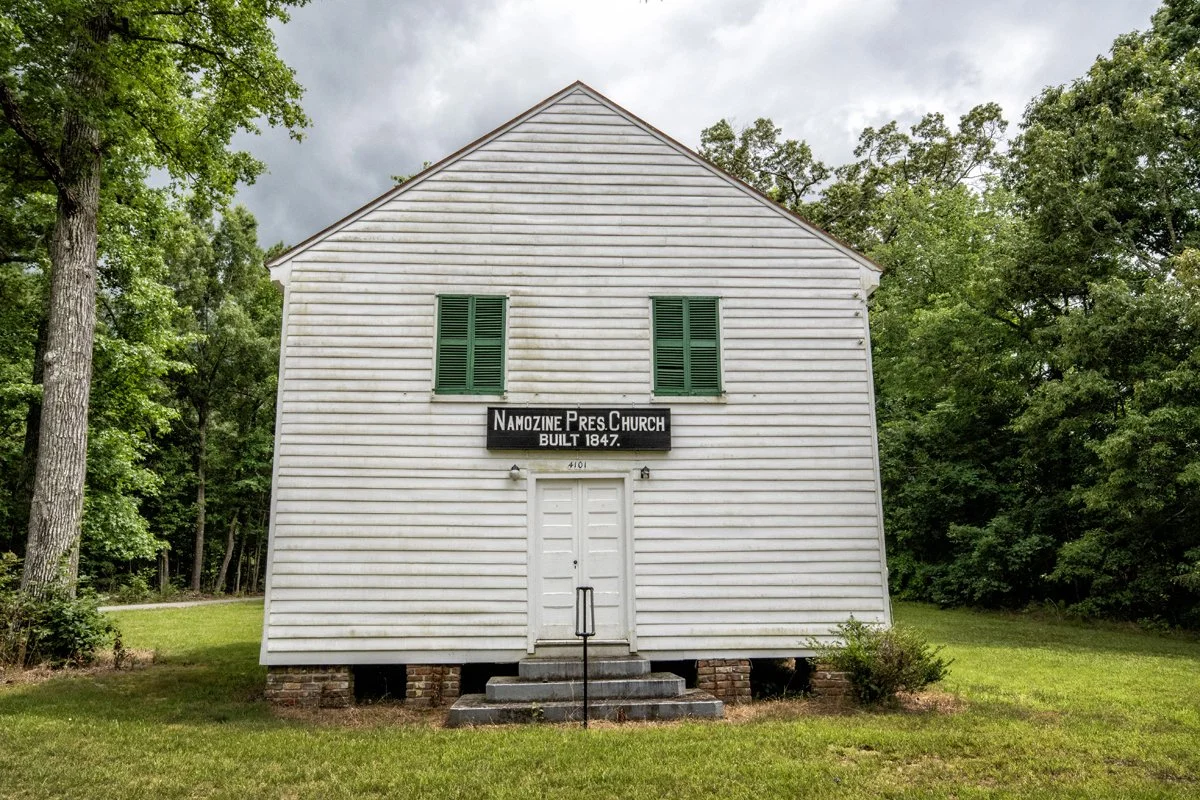
This little country church, Namozine Presbyterian Church was built in 1847. It survived that battle and still stands today. I am not sure if it has an active congregation.