The Cow Creek Mill
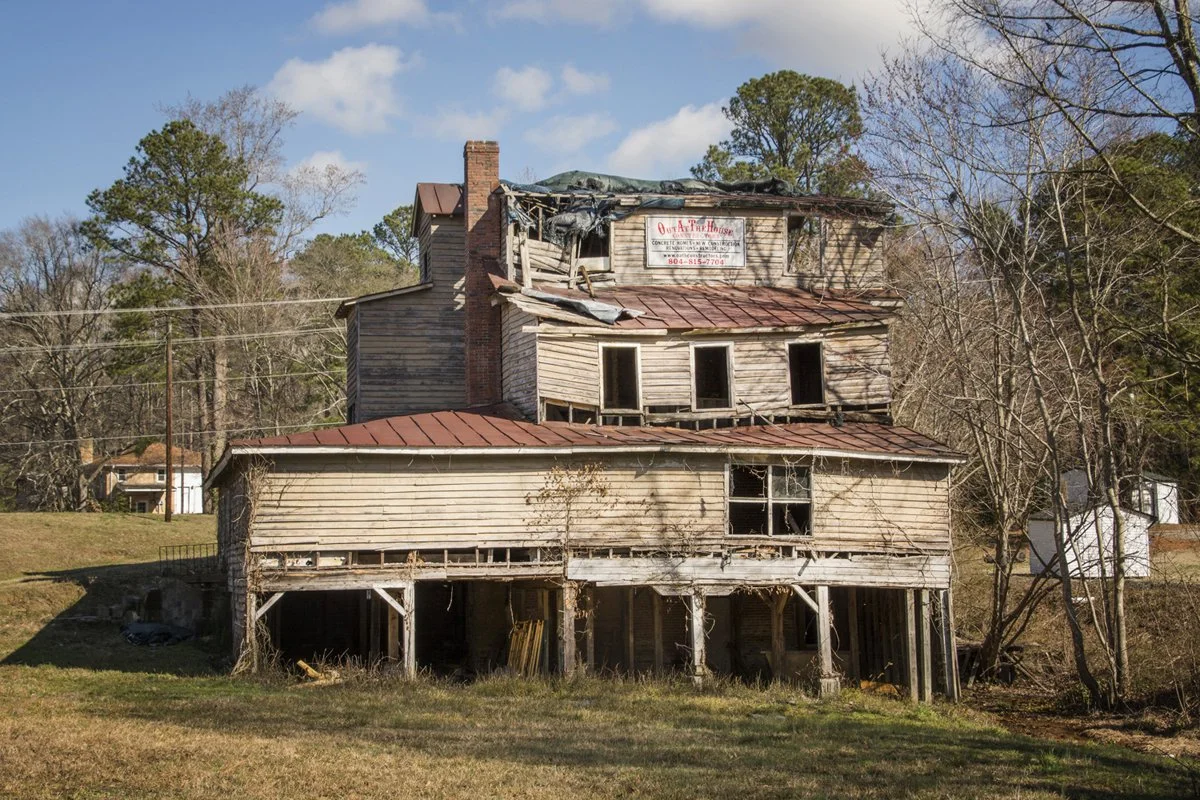
The first time I came across the mill was on Valentines Day 2020. As in most cases, especially early days in this adventure, I had no idea what I was photographing. I just knew it looked interesting and probably had a story to tell.
Photographically the challenge was that it was in a big field off a busy highway so getting in place for some shots was going to mean taking some risk. But I have more chutzpah than common sense, so I parked at a truck accessory store next to it and walked down the road on the other side of the guard rail. Back then someone had placed a sign advertising their business (Out At The House) at the top of the mill.
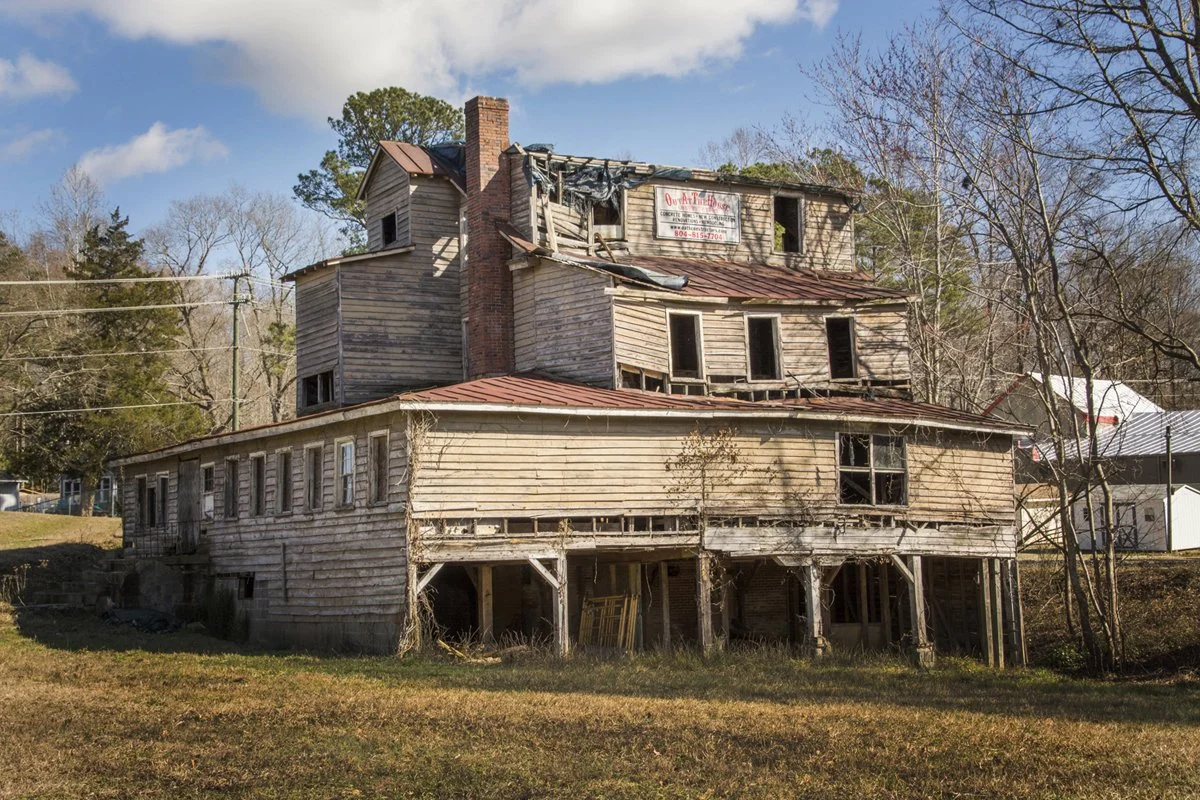
You can see that the first time I documented the mill I walked around the front, from the highway, to get different angles.
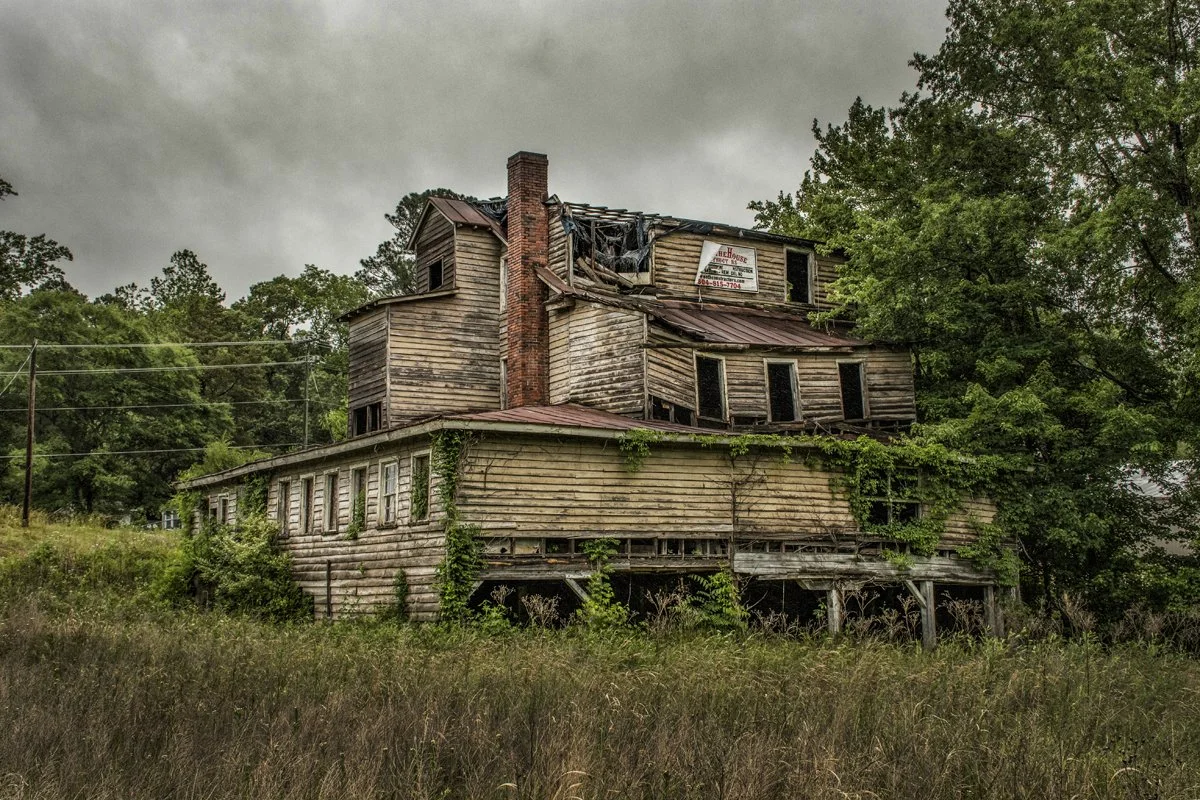
This was a year later, May 30, 2021. Still shooting from the highway and using a telephoto lens. And with a better sense of “light” looking for moodier days.
Over the years as the mill has gotten worse my photographs have gotten better. I became more inquisitive, and the last time I visited was probably the best work I’ve done regarding this mill. Instead of using a “long lens” to get close, I used a wide-angle lens which forced me to get off the side of the road and wander into the field surrounding the mill. Up close and personal.
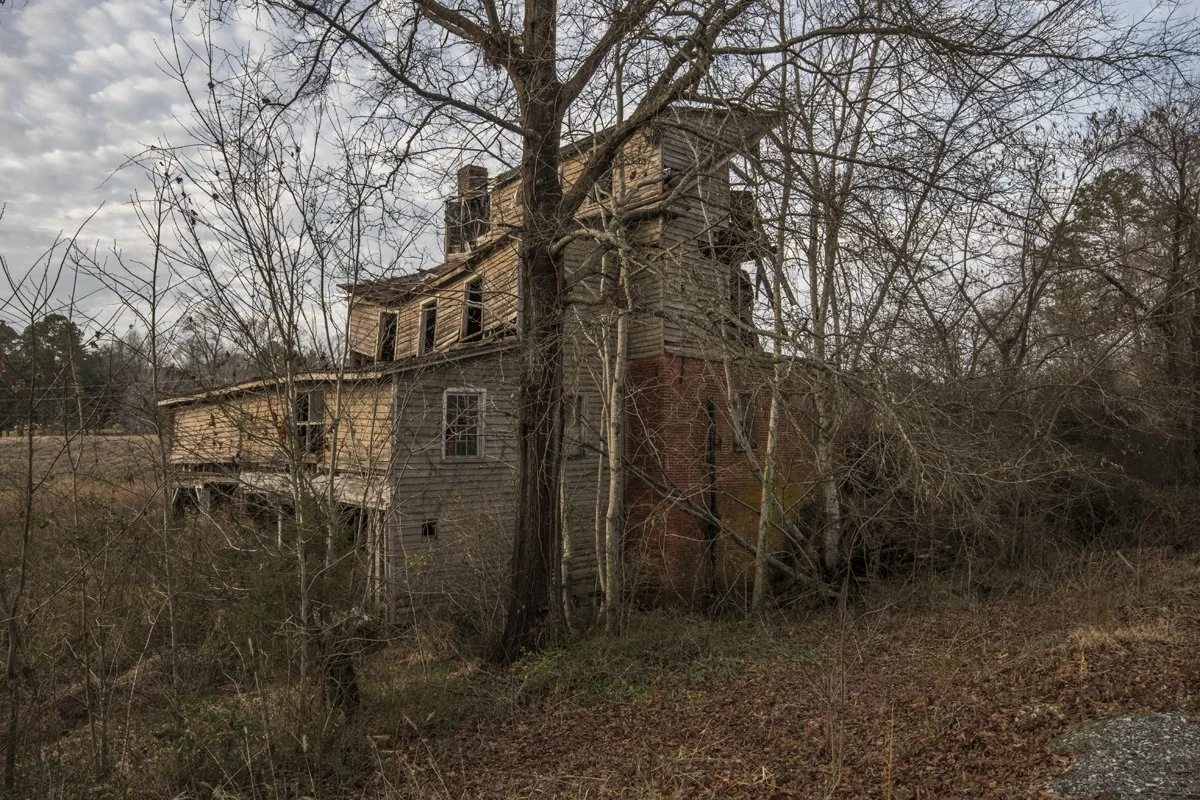
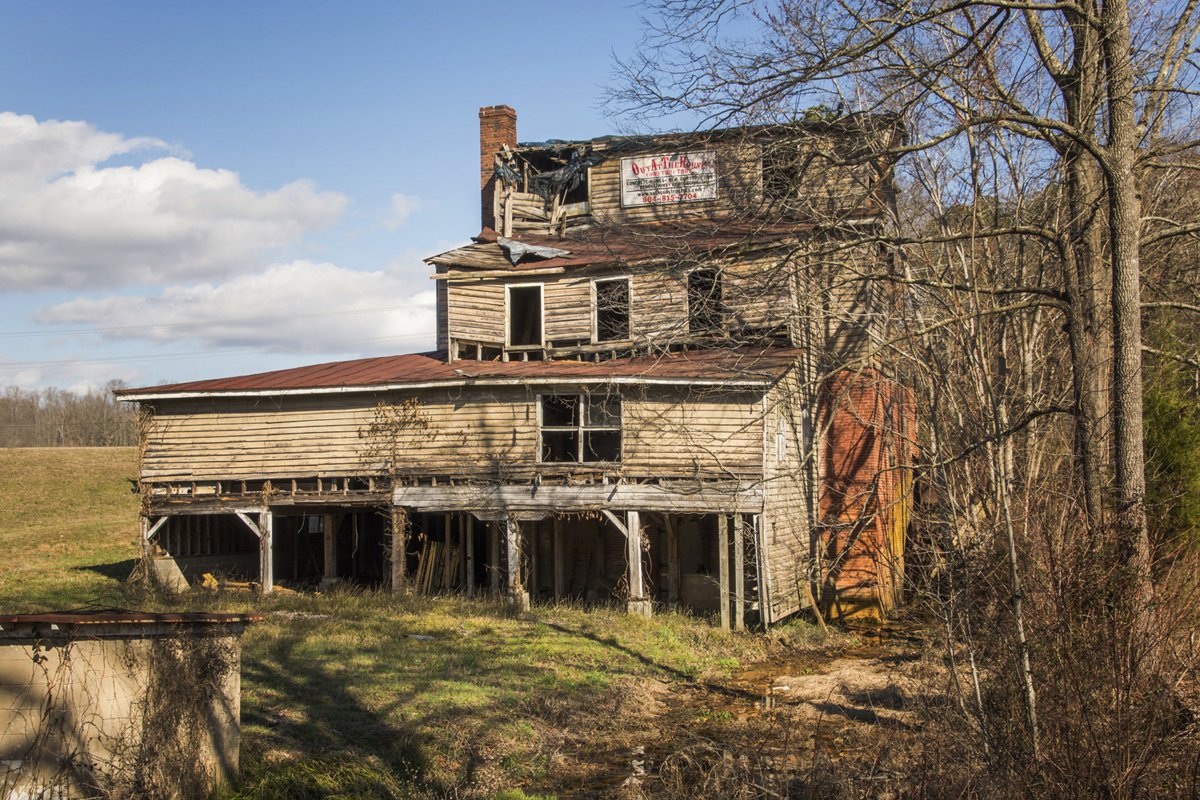
A “side” view from the parking lot of the business beside the mill.
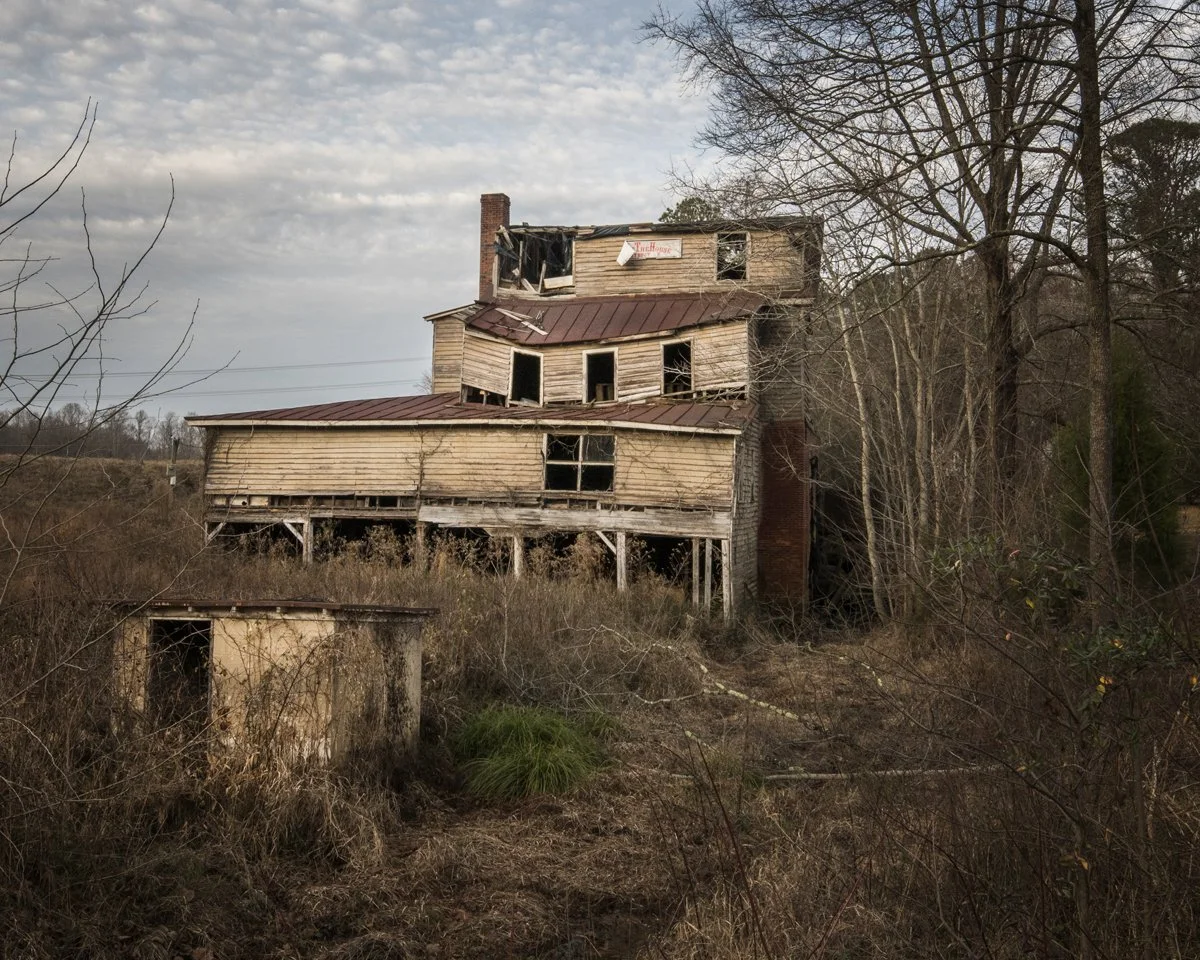
Notice how that sign is still hanging on, even though now it’s just “Out At The House.”
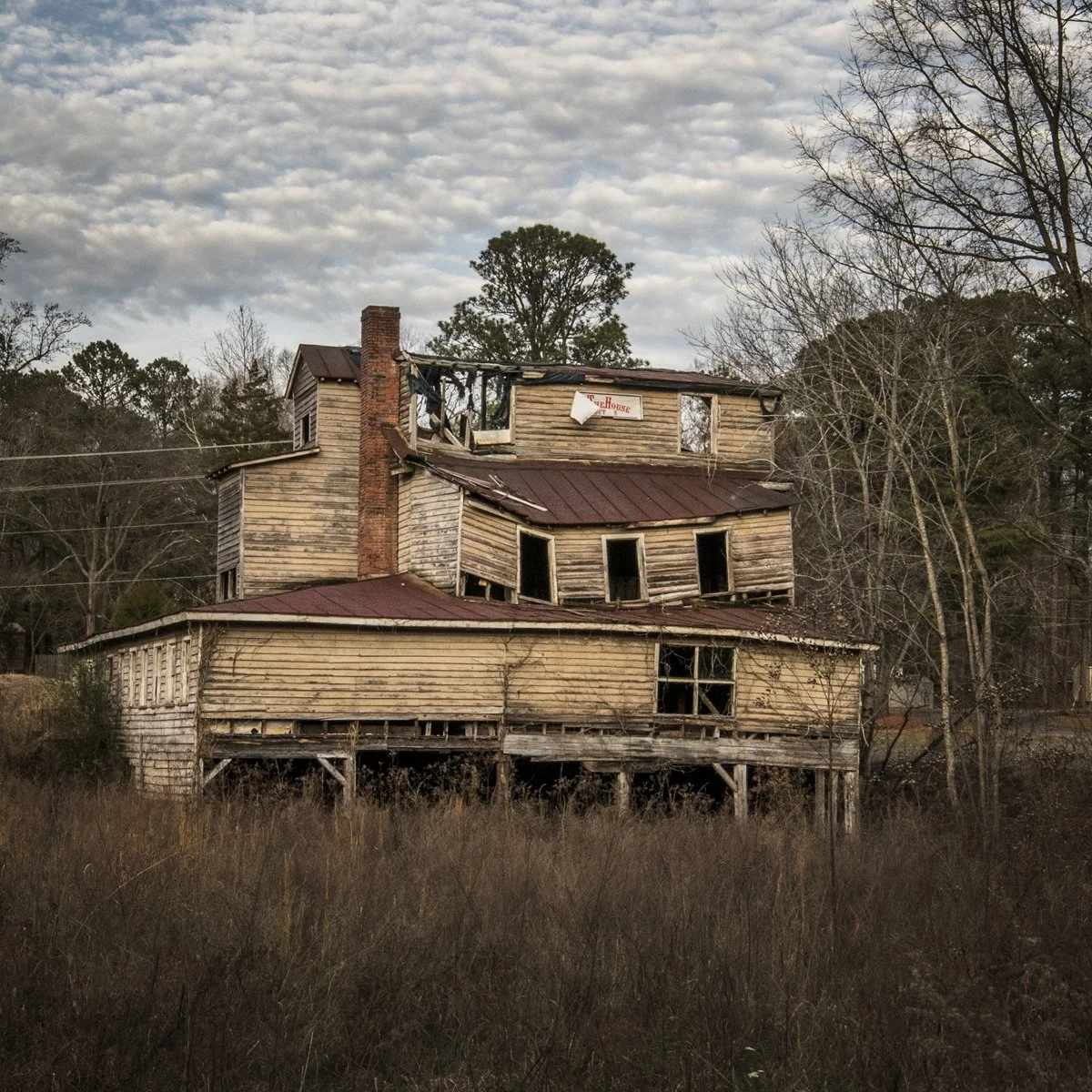
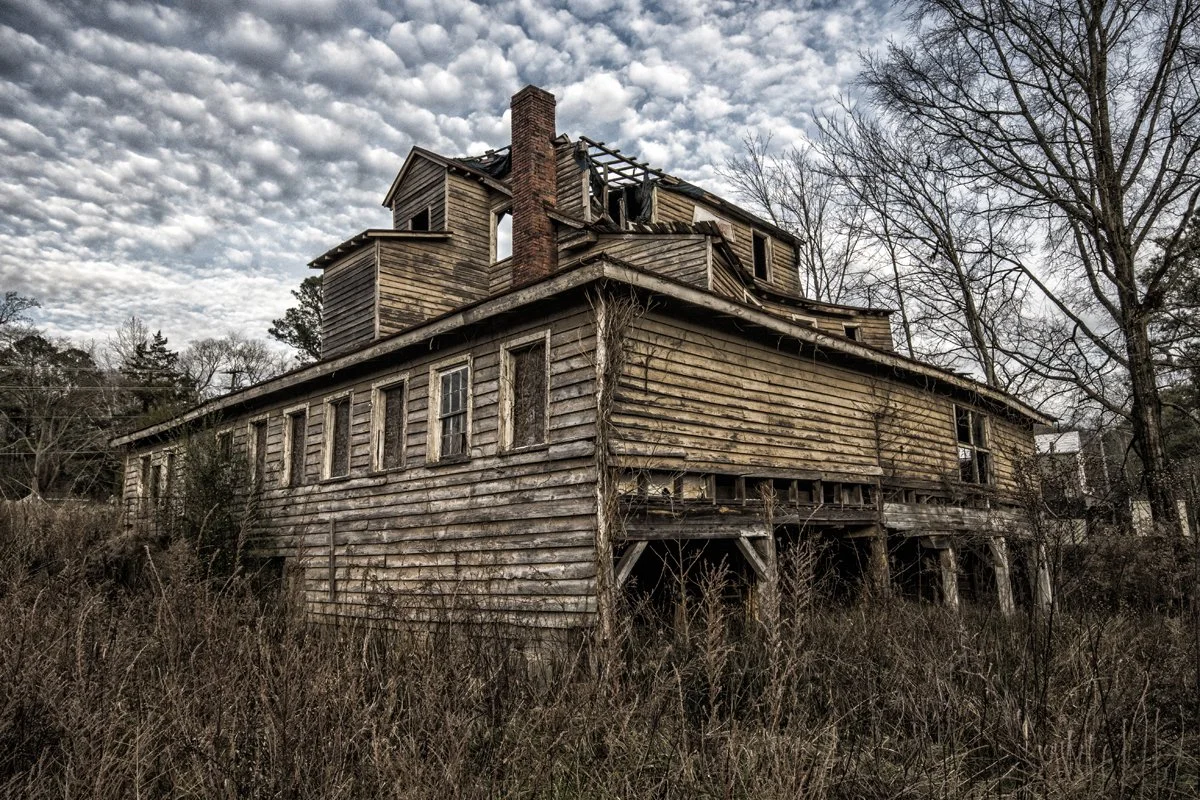
New Years Day 2022
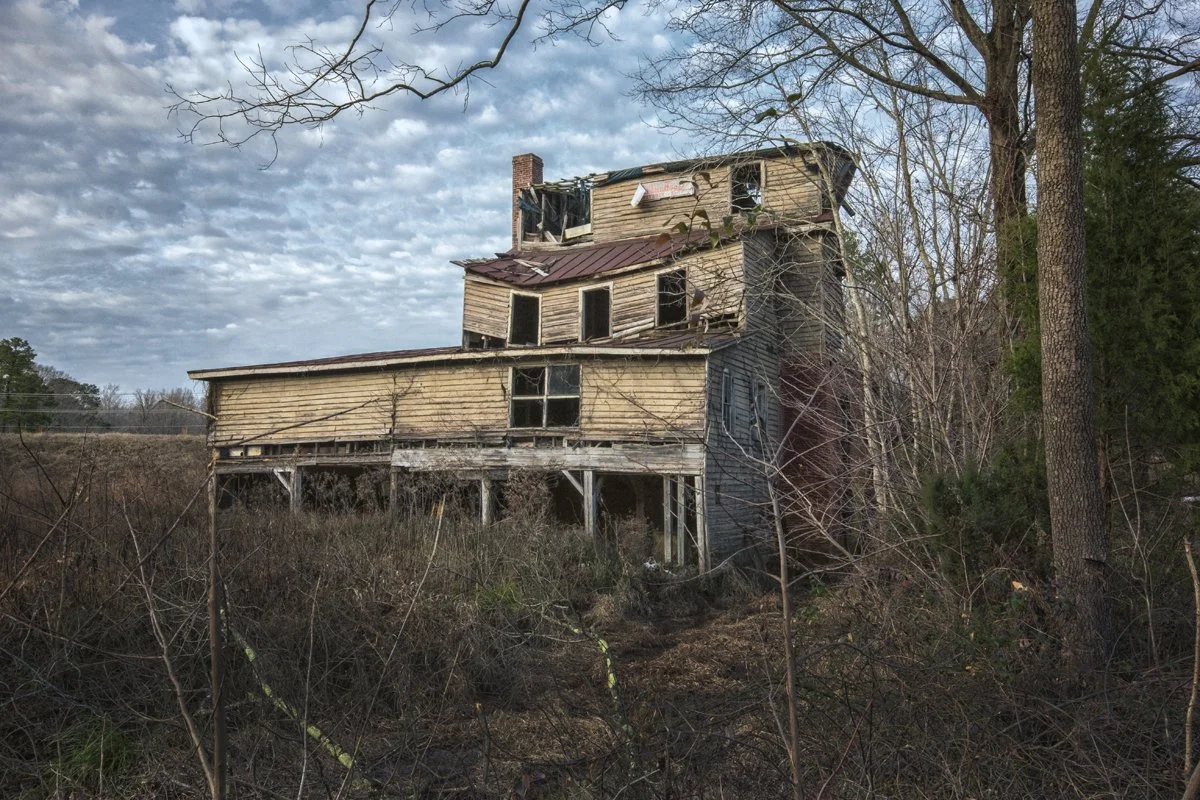
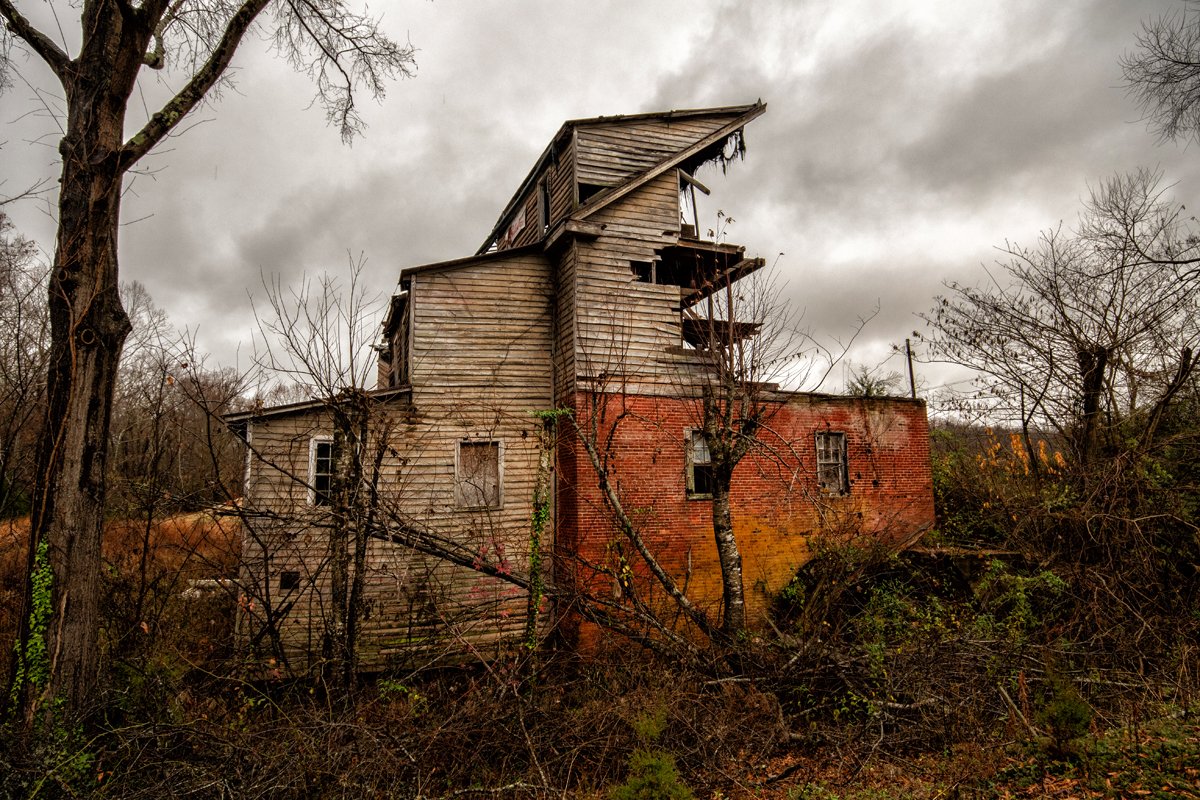
September 23, 2023
Mills, especially “gristmills,” played an important part in communities – it’s where you had your grains such as wheat, corn, and rye ground into flour. And many of these mills were “water powered” using nearby stream, rivers, ponds, and lakes as their resource for energy. The dam for the Cow Creek Pond in Gloucester County was perfect for a mill.
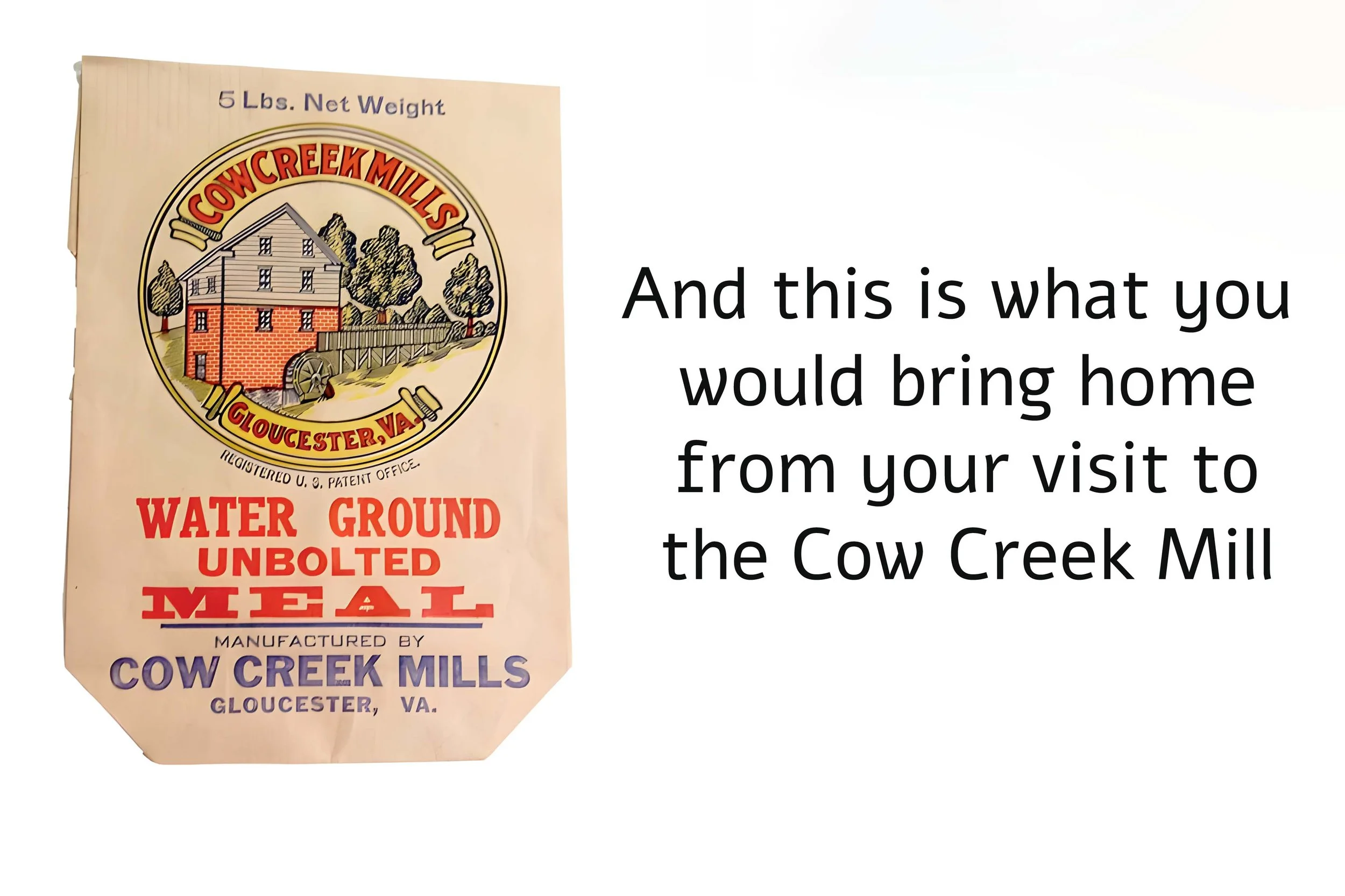
The original mill for the area was the Gloucester Steam Mills, built by Maris Kerns Sr., around 1857. Records, such as they are, indicate that there may have been a mill built in the1700s that was destroyed and Kerns used that foundation for his mill. Which was a very ambitious project. It took a crew of 36 workmen to build the mill powered by two 40-foot steam boilers. Kern also built homes for his family, his workmen, and two additional houses for the men who worked at the mill. It was an idyllic life, and a good business.
Until April 12, 1861 when the southern states succeeded from the United States and bombed Fort Sumter, and the Civil War began. Kerns joined the Confederate Army where, oddly enough, his skills as an engineer weren’t used – instead…he was a bugler.
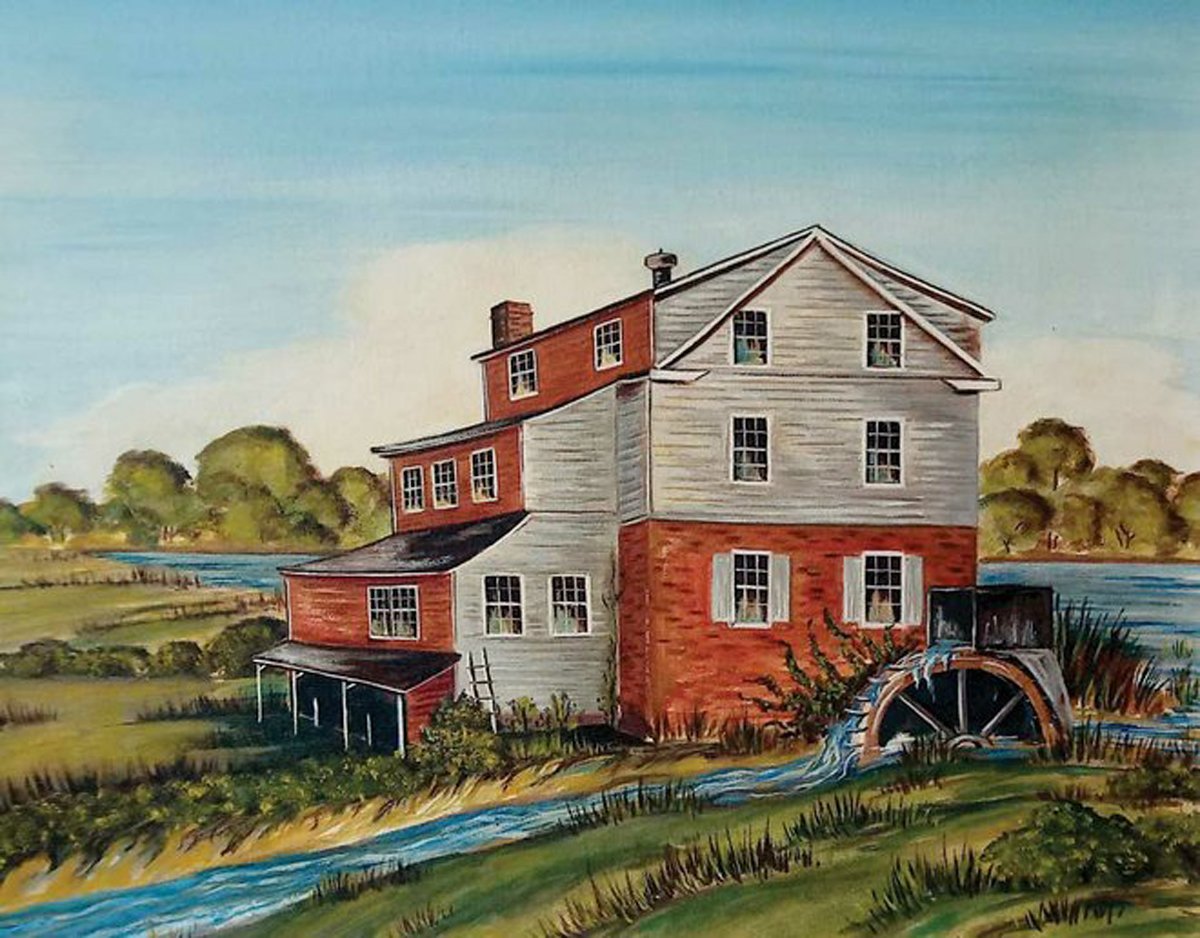
Artist rendition of the original mill courtesy of Charles J. Kerns, Sr. Revocable Trust.
During the course of the war Union Troops burned down the original mill as they did many other mills in the south. The current mill was built again after the war based on original architectural drawings made by Kerns circa 1866. Myron H Hall purchased the mill in 1950 and it remained an active mill until 1954.
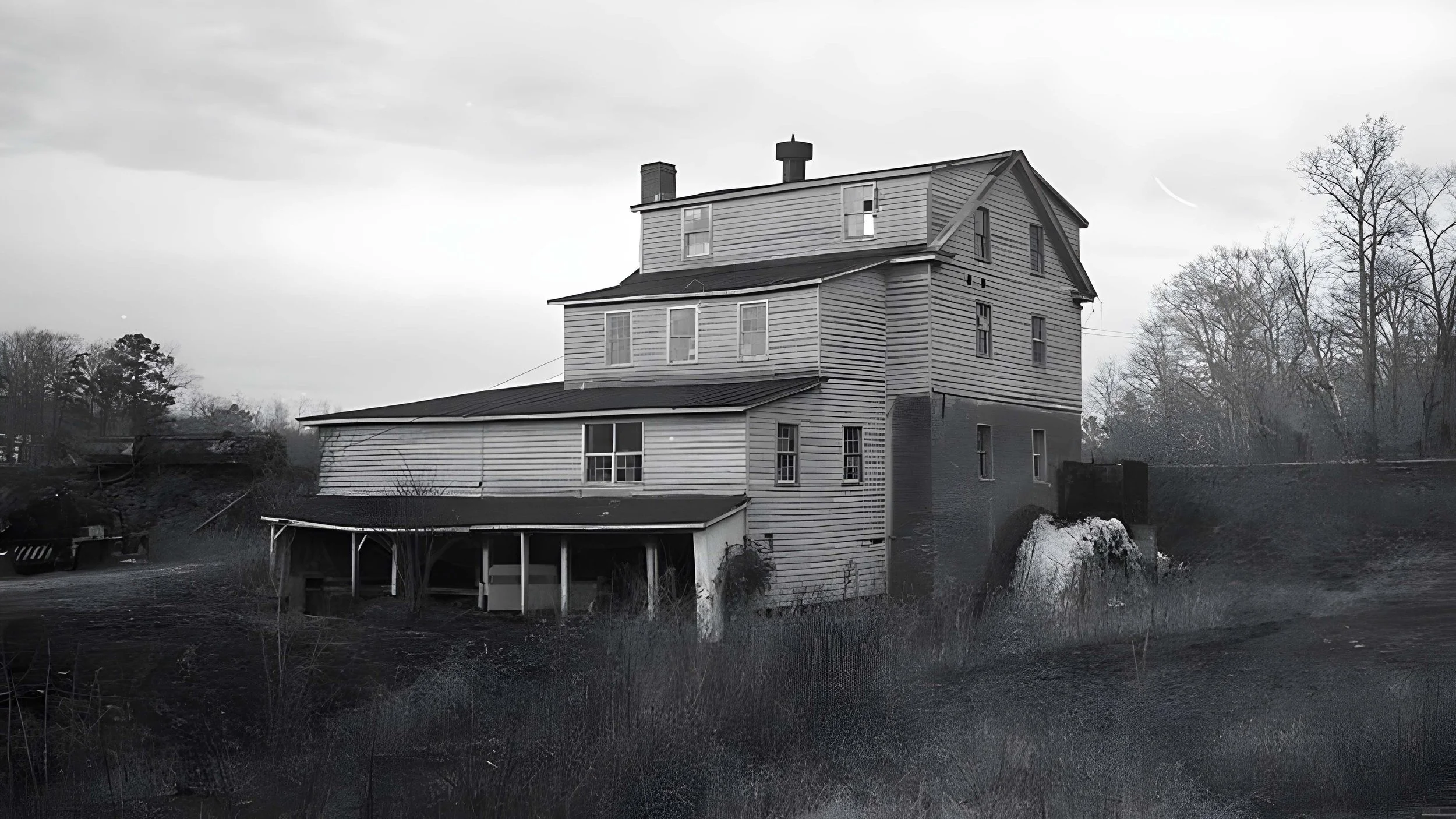
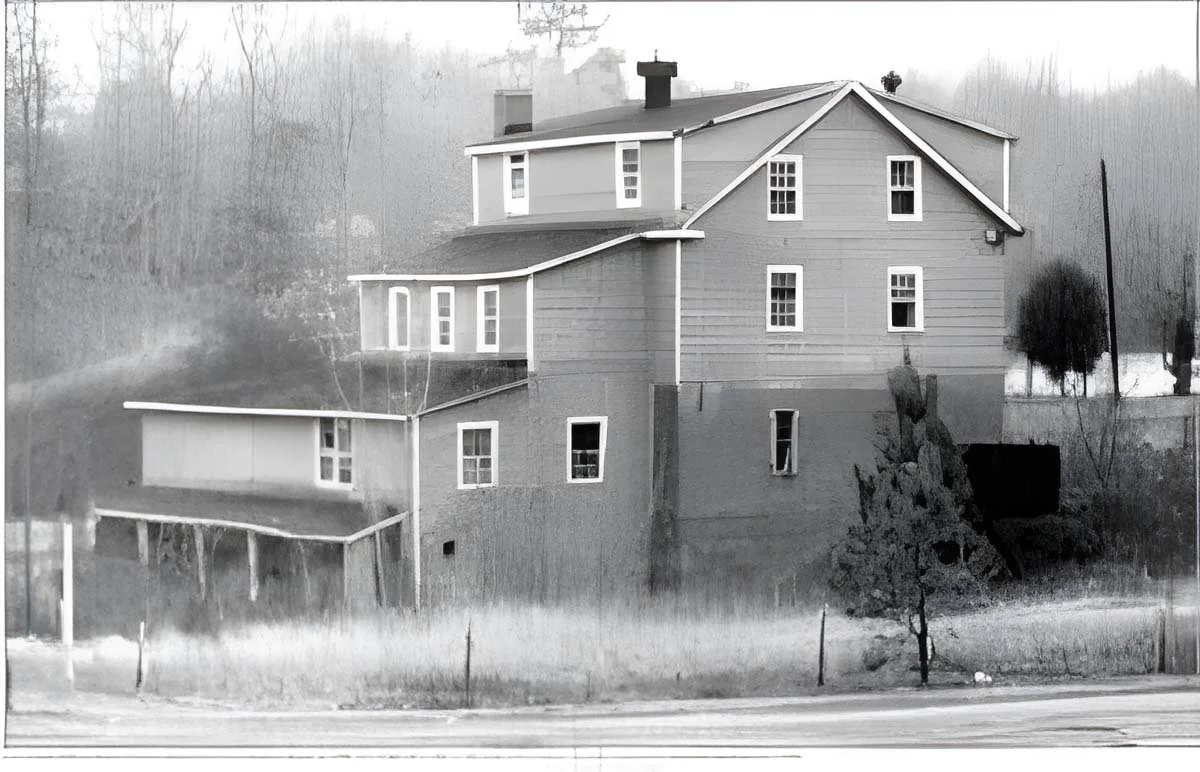
From Daily Press article (1966) Photography by Bea Kopp
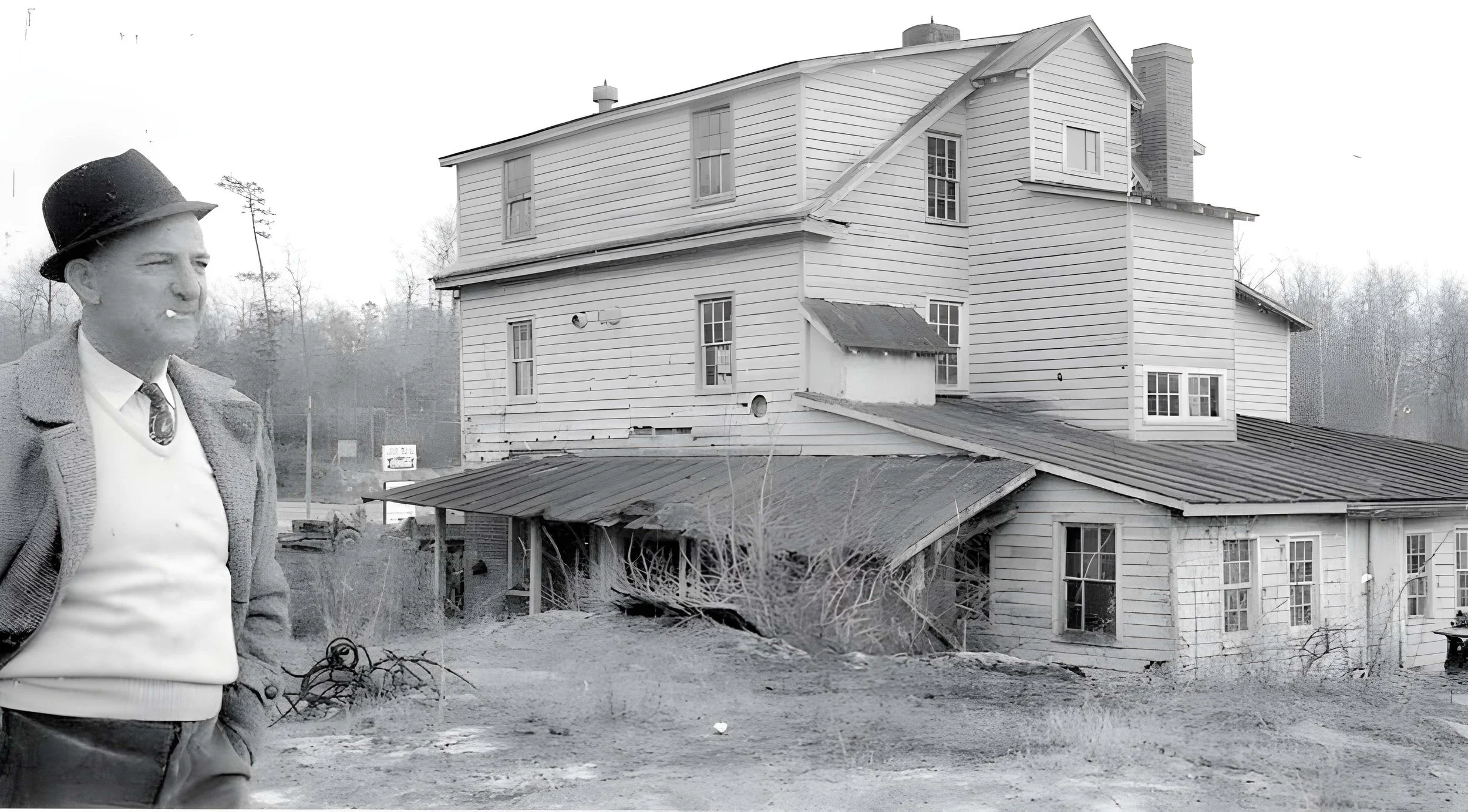
Myron H Hall Photography by Bea Kopp
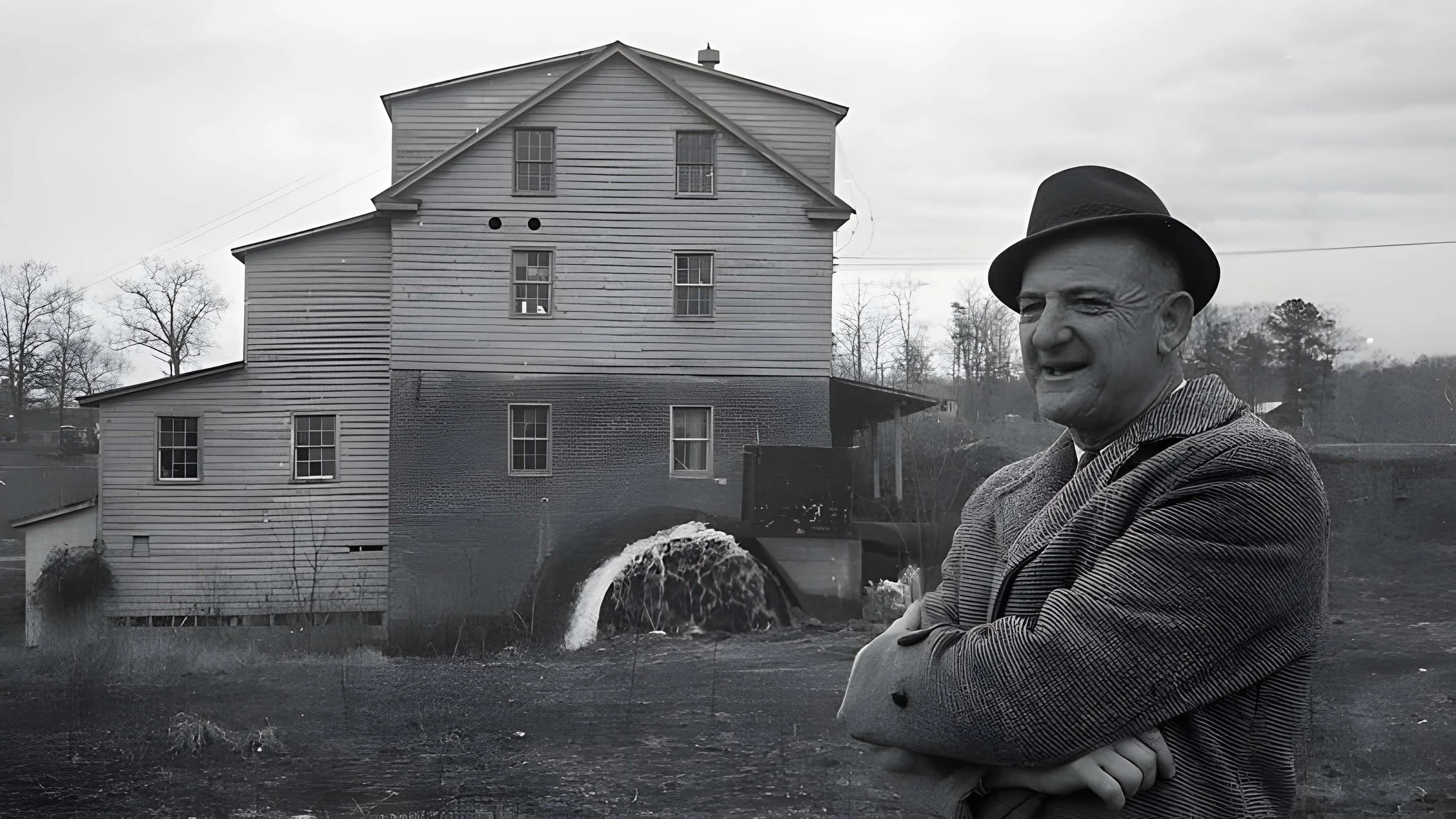
Myron H. Hall owner of Cow Creek Mill. (1966) Daily Press article. Photography by Bea Kopp
For articles on the Cow Creek Mill check out these links:
https://www.dailypress.com/2018/01/11/look-back-cow-creek-mill/
http://thehouseandhomemagazine.com/culture/our-brave-old-mill/