The Church of the Holy Innocents
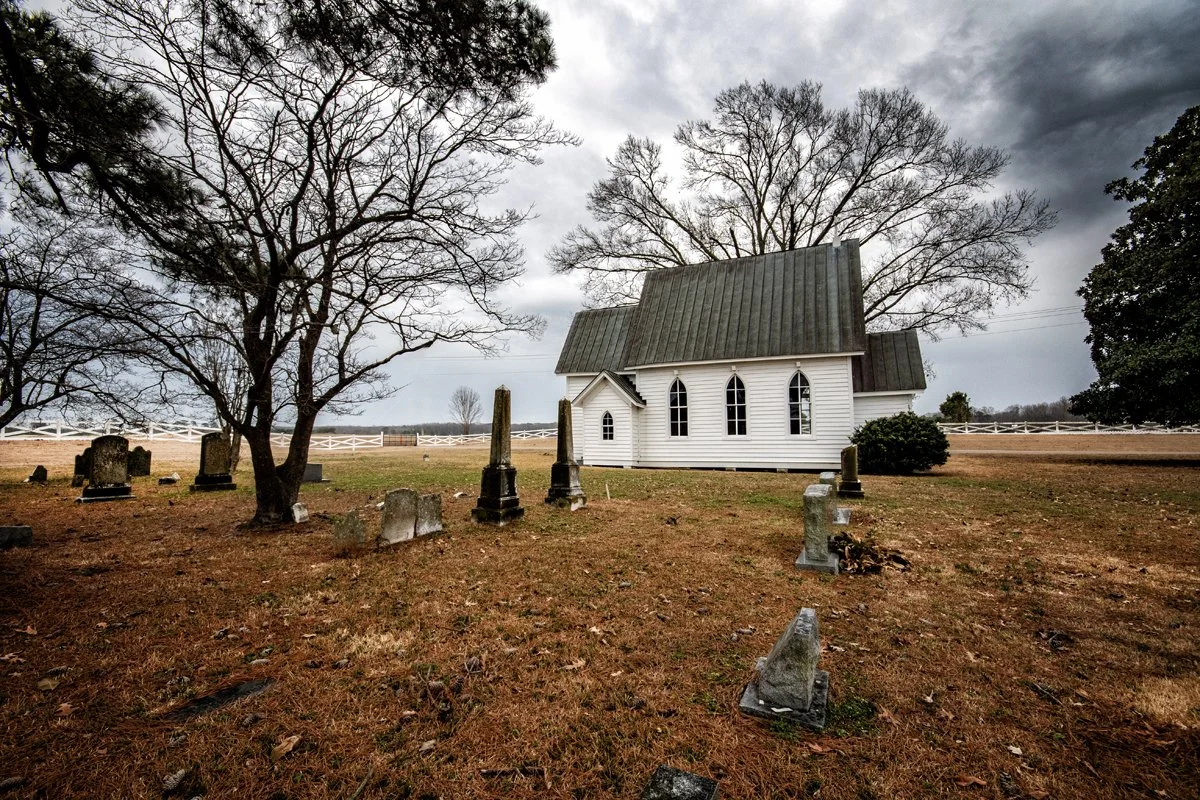
This delightful little chapel is in Bertie County. My visit there was so peaceful. A gentle breeze and the chirping and singing of birds more beautiful than most human choruses I've heard.
Do yourself a favor and pull these up one by one and don't scroll through them quickly, but spend a moment with each one and imagine yourself being in this place.
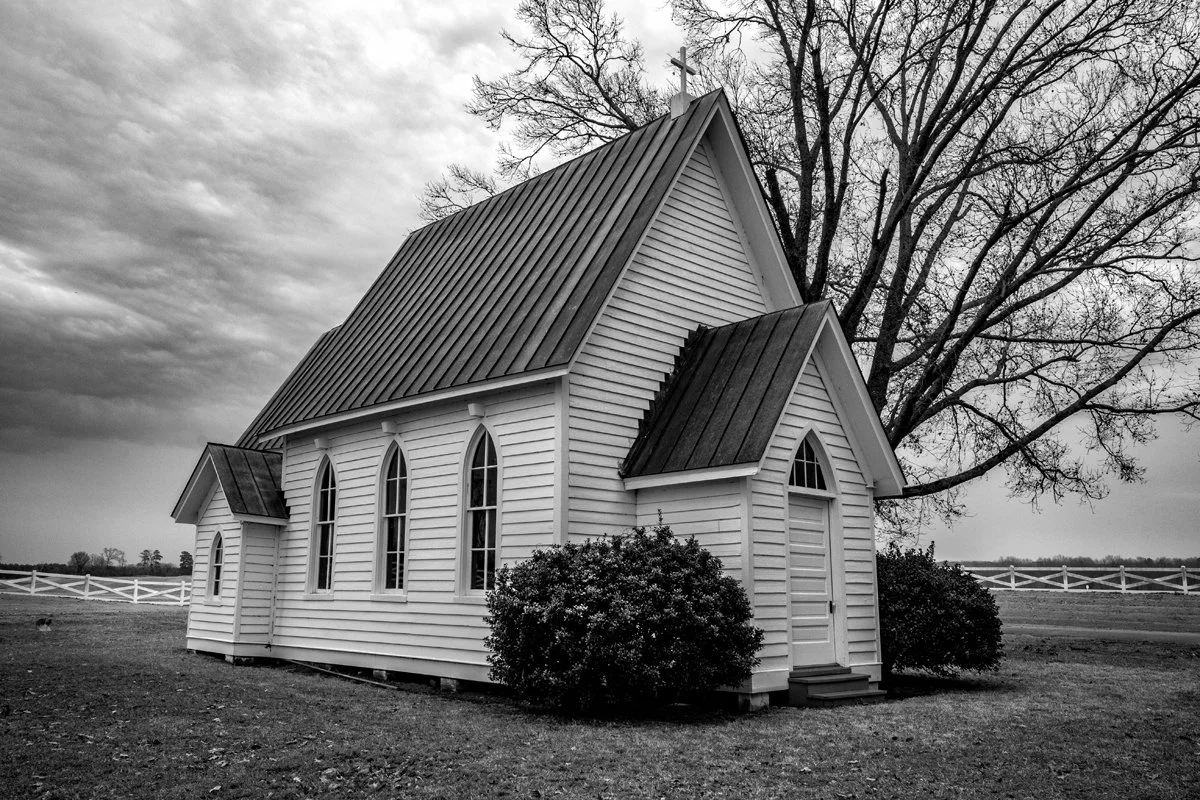
An article by Jeanette White in The Bertie Ledger-Advance, Windsor, NC, September 28, 1972. Has some interesting history for this location, as does Watson Brown's Backroad Photography. My information is derived from their articles.
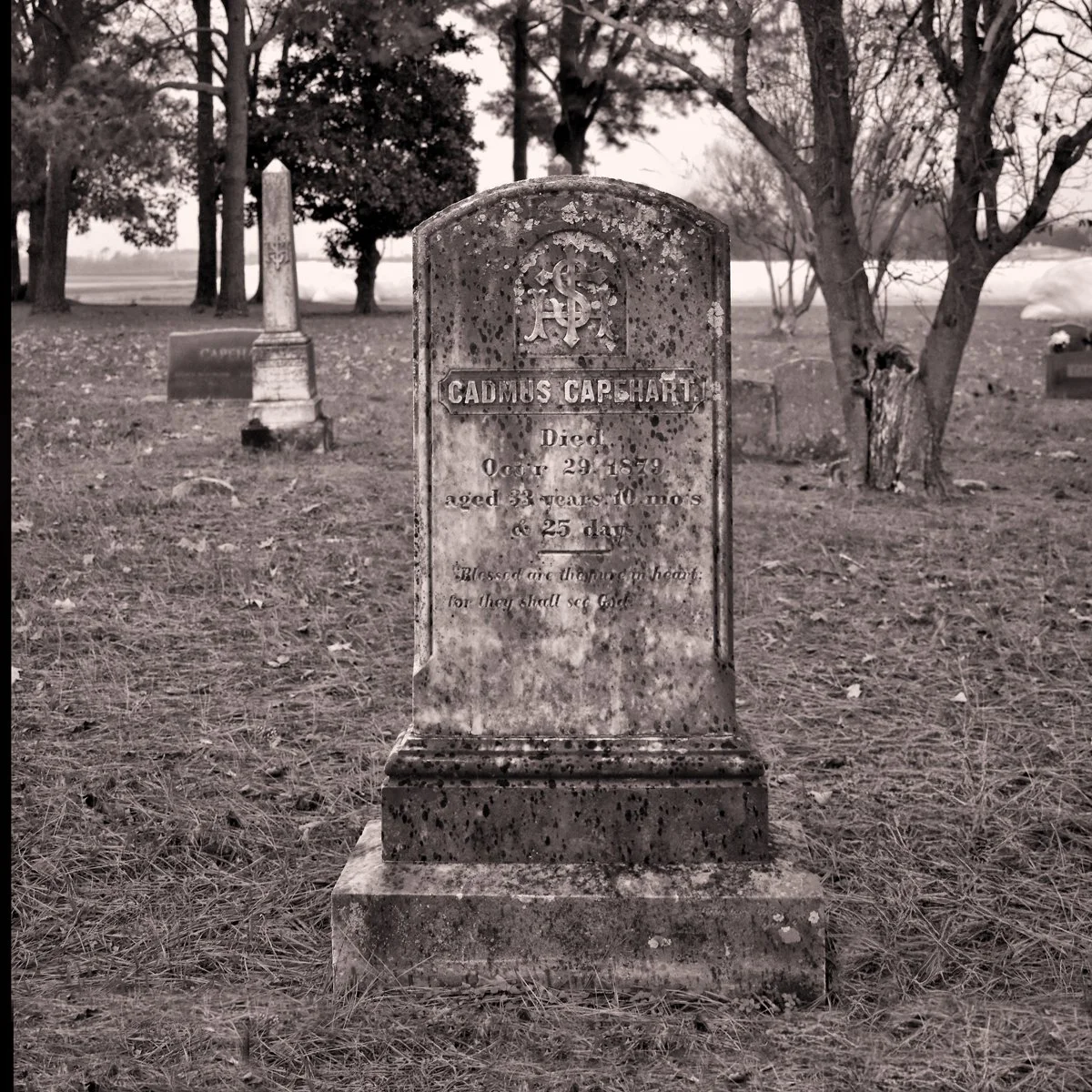
Cadmus Capehart (1845 - 1879) owned the Elmwood Plantation and had seven children. Now you can imagine how challenging it is to get seven small children to church in today’s society, but imagine how much more so it was in the 19th century - especially when the closest churches were either the St. Paul’s Episcopal Church in Edenton or St. Paul’s Episcopal Church also in Edenton. Both are roughly 15 miles away; but that 15 miles of travel by wagon or coach, not by car, with seven squirming kids.
And that’s just one way…
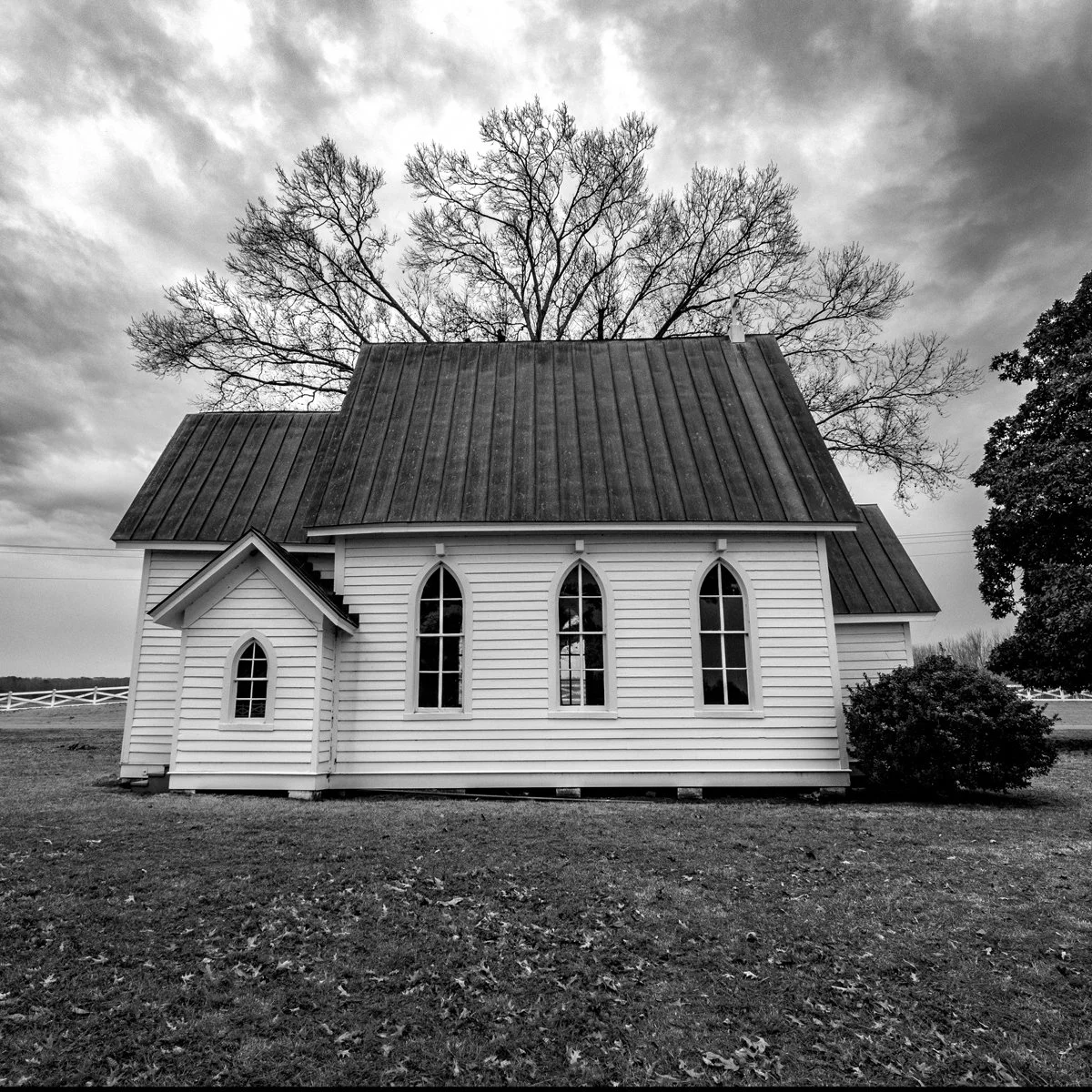
So Cadmus decided (probably for the sake of his and his wife’s sanity) to build his own chapel on his plantation. Work on the building began in 1879 but Cadmus did not live to see it completed. He passed away later that year (1879).
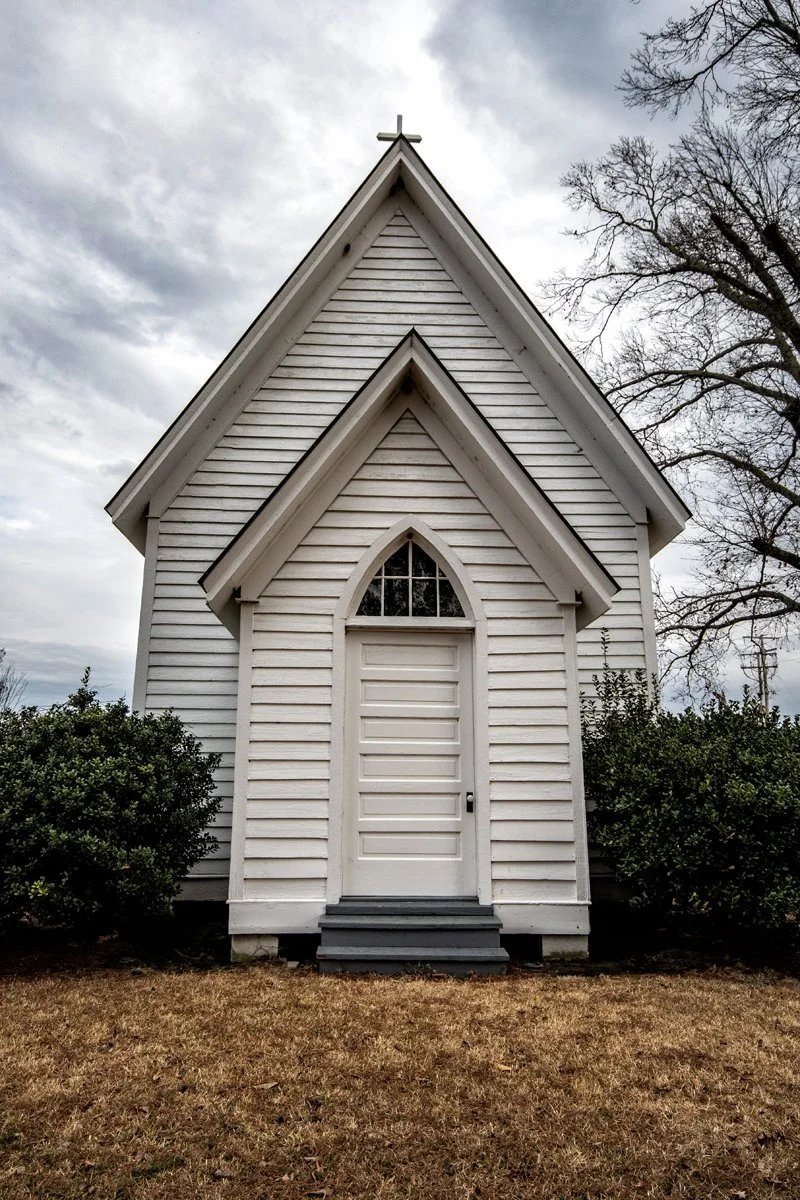
If they had a weeding here I think it would be hard for the bride and groom to exit together.
Upon the death of Cadmus, George Washington Capehart of Scotch Hall decided, in 1880, to complete the project and had the foundations moved to its present location where I came upon it. He recorded that cost as $500. Cadmus’s wife, Mrs. Cadmus Capehart (Mary Martin Capehart) decided on the name of “The Church of the Holy Innocents.”
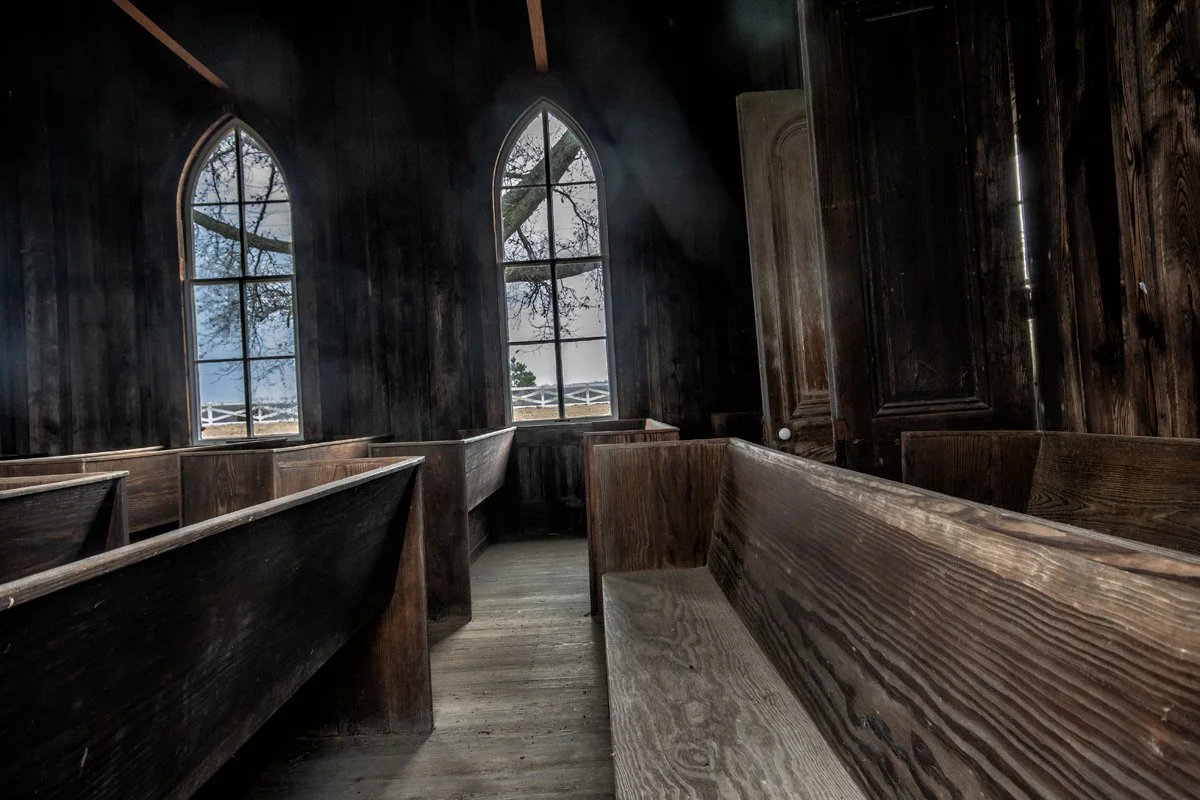
Sermons would be short here, or I’d have to bring a seat cushion.
Every commentary I’ve read all agree that the chapel would seat about a hundred parishioners, and note that the only source of heat is a wood burning stove. They also note the lack of electricity. So in essence this chapel is as it was in 1880 when it was consecrated by the the Assistant Bishop of North Carolina, the Right Rev. Theodore Benedict Lyman.
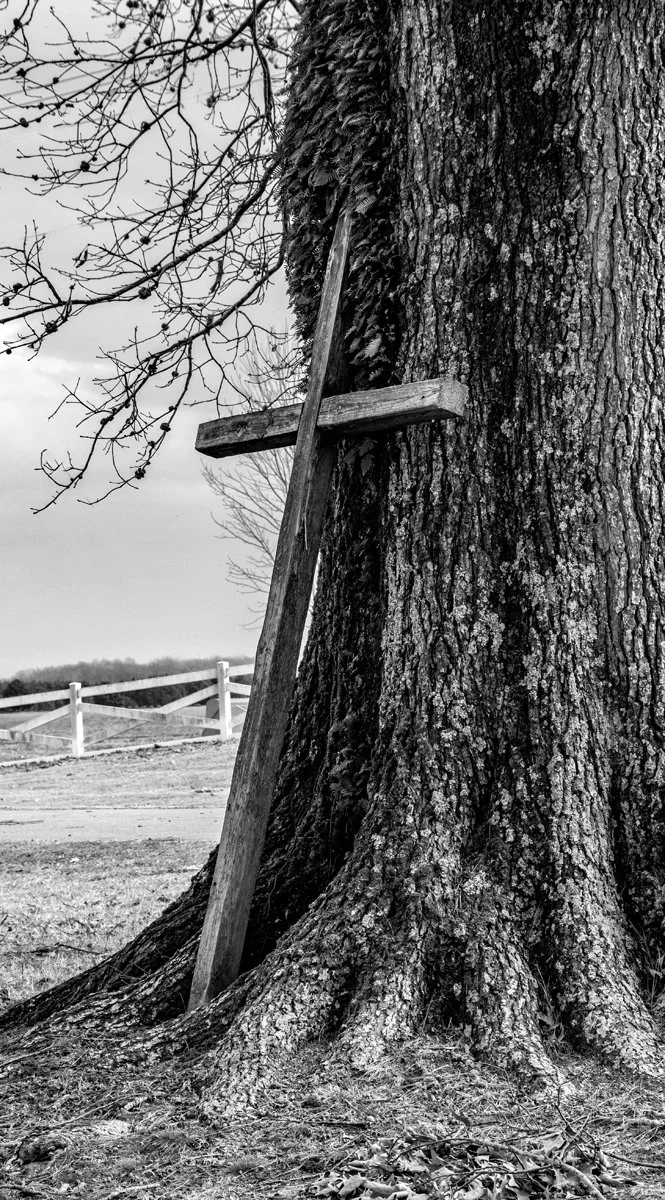
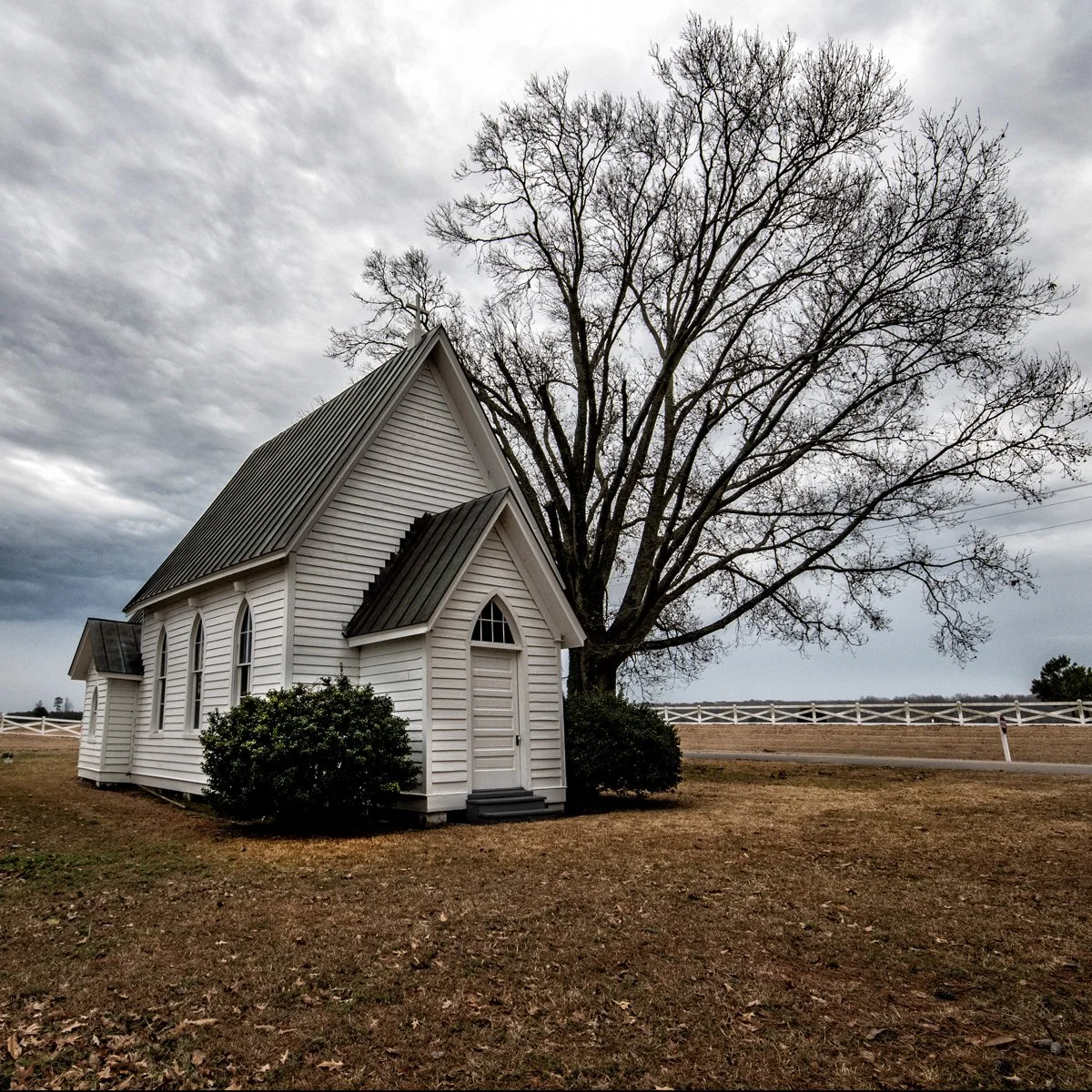
This wooden cross sits against the tree that gives the chapel its shade in the summer.
There is a video homage on my YouTube page that you might enjoy:
https://www.youtube.com/watch?v=b8NZrmJSoKk